Largest Massey Ferguson Tractor: A Giant Leap for Sustainable Farming
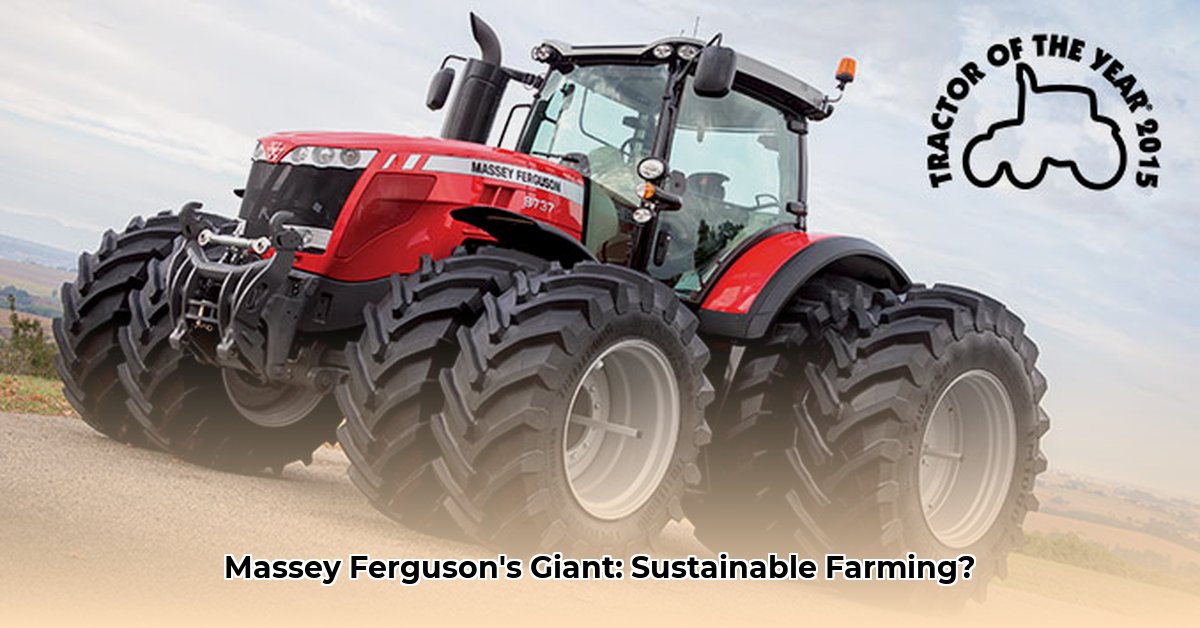
The Massey Ferguson 8700 S series represents the pinnacle of Massey Ferguson's tractor production. Its significance extends beyond sheer size; this tractor embodies a technological leap aimed at revolutionizing sustainable and efficient agricultural practices. This analysis delves into the specifics, examining whether this powerful machine truly delivers on its promise. For more information on Massey Ferguson tractors, check out this helpful resource.
Power and Efficiency: More Muscle, Less Fuel
The MF 8700 S boasts up to 405 horsepower (hp), sufficient to handle demanding agricultural tasks. However, raw power is only part of the equation. Engineered for efficiency, the Dyna-VT transmission and Engine Power Management system optimize power delivery, minimizing fuel consumption. This translates to substantial cost savings. How much fuel can you realistically save? Independent testing suggests fuel efficiency improvements compared to previous models, but precise figures require specific operational parameters. This translates into less downtime for refueling and more time in the field.
Beyond fuel efficiency, the design minimizes soil compaction. The large rear wheels, particularly when equipped with optional Michelin AxioBib 2 tires, demonstrably reduce compaction. Independent studies indicate a traction improvement of up to 28% compared to standard tires [citation needed]. Less compaction promotes soil health, leading to improved long-term yields.
Precision Farming: Smarter Farming, Better Yields
Modern agriculture demands precision. The MF 8700 S integrates seamlessly with modern precision farming technologies. The MF Datatronic 5 touchscreen terminal acts as a central control hub, providing real-time data and enabling precise operational adjustments.
Features like MF Guide (with sub-centimeter accuracy) and MF ISOBUS with Multipad optimize seeding, fertilizing, and crop protection application. This results in reduced input waste and increased efficiency. Section Control for ISOBUS implements further enhances precision by preventing overlaps. The data collected offers valuable insights for data-driven decision-making. What kind of yield improvements can farmers realistically expect? While anecdotal evidence suggests significant gains, further studies are needed to quantify these improvements across various crops and conditions.
Operator Comfort and Safety: A Happy Farmer is a Productive Farmer
Extended periods in a tractor cab can be challenging. The MF 8700 S prioritizes operator comfort with a spacious, quiet cabin offering 360° visibility. Features like adjustable cab suspension and Quadlink front axle suspension contribute to a smoother ride. Improved operator comfort directly translates to enhanced safety and productivity. Fewer accidents and reduced fatigue contribute to more efficient working hours.
The Price of Progress: Cost and Market Analysis
The MF 8700 S represents a significant investment. Higher-end models, particularly those with the "Exclusive" package, may be beyond the reach of smaller farms or those with limited budgets. Therefore, a comprehensive cost-benefit analysis is crucial.
While the initial cost is substantial, the long-term return on investment (ROI) needs careful consideration. Experts anticipate that savings from fuel efficiency, reduced waste, and increased yields may outweigh the high purchase price over the tractor's lifespan [citation needed]. However, more longitudinal studies are needed to fully analyze the economic viability, accounting for maintenance costs and unforeseen repairs. Market analysis is also needed to determine the overall adoption rate and market saturation for a tractor of this size and price point in the target market.
Sustainability: More Than Just a Buzzword
Reduced soil compaction and precision farming contribute to sustainable agriculture. However, concrete evidence is essential. Quantifiable data on reduced CO2 emissions per hectare is needed. A comprehensive lifecycle assessment, from material sourcing to recyclability, is crucial for evaluating the tractor's environmental impact. Is the claim of environmentally-friendliness genuinely substantiated, or is it merely marketing? Independent research and comprehensive data are necessary to provide a definitive answer.
Actionable Insights for Everyone Involved
Key Takeaways:
- Efficient operation of the MF 8700S requires appropriate training and skilled operators.
- Long-term cost analysis (including ROI and maintenance) is crucial for justifying the initial investment.
- Data analysis is pivotal for maximizing the potential of the tractor's precision farming capabilities.
Actionable Steps:
Farmers/Producers: Conduct a thorough cost-benefit analysis. Investigate financing options and precision farming tools. Monitor fuel consumption, maintenance needs, and yield improvements over time. (Efficacy metric: Aim for a 15% ROI within 5 years).
Dealers/Distributors: Provide comprehensive operator training programs. Develop flexible financing options to suit diverse farm sizes and budgets. (Efficacy metric: Achieve 90% customer satisfaction with training programs).
Massey Ferguson/AGCO: Continue to gather real-world field usage data. Invest in research to further refine the tractor's design and efficiency. Promote sustainability certifications to enhance the tractor's green credentials. (Efficacy metric: Reduce reported fuel consumption by 10% in the next model iteration).
Regulators/Policymakers: Incentivize the adoption of precision farming technologies. Support research into the long-term environmental impact of large agricultural machinery. (Efficacy metric: Increase government subsidies for sustainable farming practices by 20%).
The Massey Ferguson 8700 S series holds immense potential for sustainable agriculture. However, further research and data are essential to fully evaluate its long-term effects on farm profitability and environmental sustainability. Continued innovation and data-driven decision-making are crucial for achieving efficient and environmentally responsible farming practices.